7 Fabric Behaviors That Change When the Humidity Drops
Quick Answer: Dropping humidity changes seven things about how activewear behaves: static increases sharply, moisture-wicking becomes more effective, fabrics feel stiffer, static-driven cling changes the fit, colors read slightly differently, drying times drop, and odor develops more slowly. Most of these work in your favor. The two worth actively managing are static - which fabric softener is the wrong fix for - and the increased stiffness of some technical fabrics in cold, dry air.
Nothing about the garment changed. The air did, and synthetic fabric is unusually sensitive to that.

1. Static increases sharply, and 2. Wicking works better
1. Static increases sharply. Humid air is mildly conductive, so charge dissipates as it builds. Dry air is not, so charge accumulates - and synthetic fibers like polyester and nylon generate charge readily through friction.
Why it matters: static makes leggings cling to skirts and dresses, makes layers stick together, and produces the small shocks that arrive with every doorknob from October onward. Layering multiple synthetic pieces multiplies it, which is precisely what transitional dressing requires.
What to do: the wrong answer is fabric softener - it coats fibers, degrades moisture management permanently, and reduces the performance you paid for. The right answers are wool dryer balls, air drying, a light mist of water on the garment, or a leave-in anti-static spray designed for synthetics. Adding a natural fiber layer between two synthetic ones also helps considerably.
2. Wicking works better. Moisture-wicking depends on evaporation, and evaporation is faster when the surrounding air is drier.
Why it matters: the same fabric that felt clammy in August humidity performs noticeably better now. This is why fall running feels so much more comfortable - partly temperature, and substantially the humidity change working with your fabric rather than against it.
What to do: nothing, except recognize it. It is the free upgrade of the season.
3. Fabrics feel stiffer, and 4. The fit reads differently
3. Fabrics feel stiffer. Fibers absorb small amounts of atmospheric moisture, and that moisture acts as a plasticizer, keeping them supple. Dry air removes it.
Why it matters: the effect is modest for polyester and nylon, which absorb little moisture, and noticeable for any garment with cotton, viscose, or wool content. A cotton-blend top that felt soft in July feels crisper in October, and this is entirely normal.
Cold amplifies it. Elastane in particular becomes stiffer as temperature drops, which is why leggings pulled from a cold car feel less stretchy for the first few minutes of wear. They recover within minutes of contact with body heat - nothing is wrong.
4. The fit reads differently. Static cling changes how a garment sits against the body, and reduced fiber pliability slightly changes how fabric drapes.
Why it matters: people frequently think a garment has shrunk or changed shape in autumn when what has changed is how it clings and drapes. Before assuming your leggings shrank, consider that you are wearing them over tights in dry air - the cling is doing something the fabric is not.
What to do: the static fixes above solve most of the perceived fit change. If a garment genuinely no longer fits, check the waistband recovery rather than blaming the season.
5. Colors read differently, and 6. Drying time drops
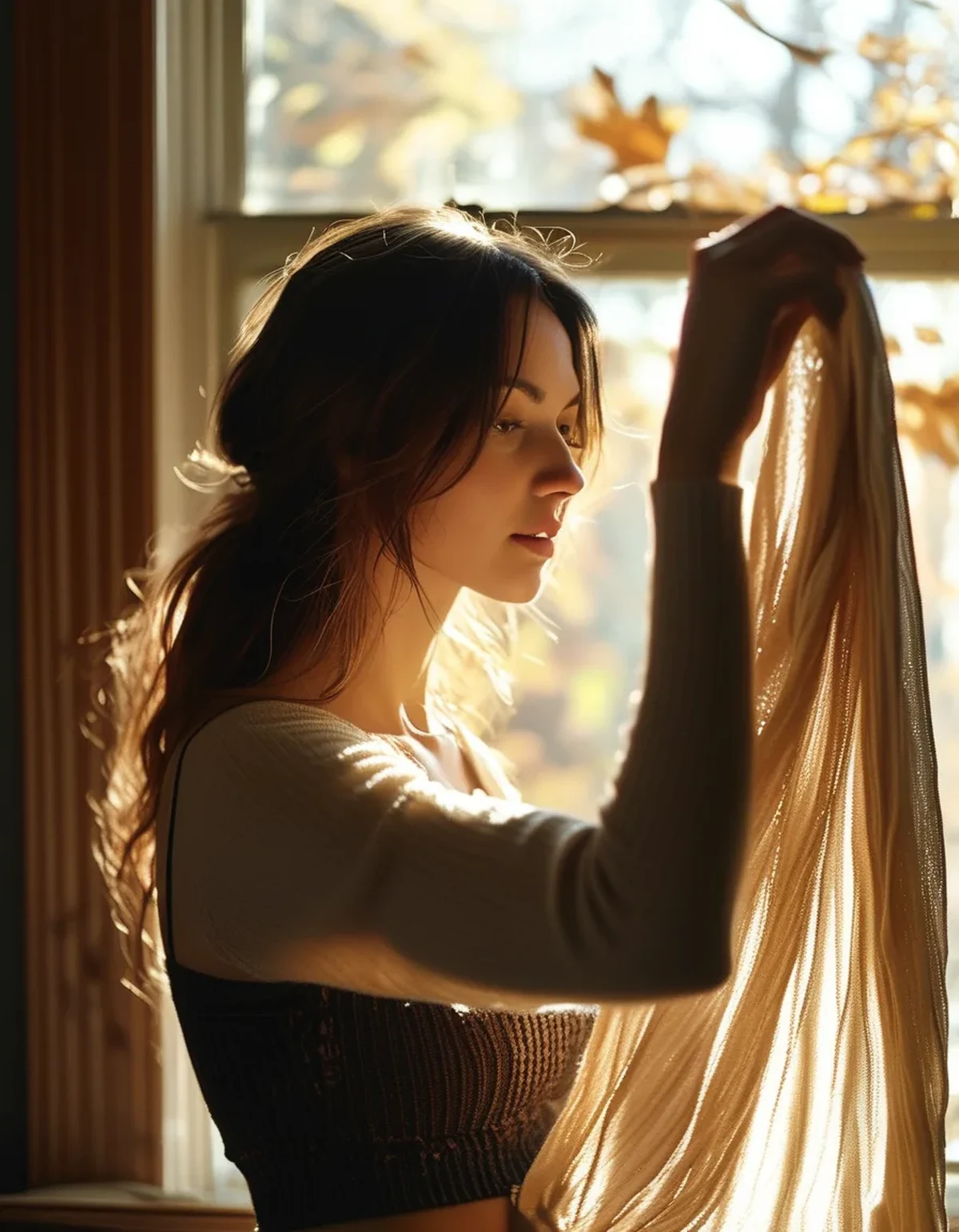
5. Colors read differently. This is partly the fabric and mostly the light, but the practical result is the same.
Why it happens: lower humidity means less atmospheric scattering, and a lower sun angle means warmer light. Together they change how saturated colors appear and how much texture shows. Cool-toned colors look flatter and warm-toned colors look richer, which is the physical basis for why summer palettes suddenly seem wrong.
What to do: nothing to the clothes. It is worth knowing when buying, since a color that looks right in a store’s fluorescent lighting may read differently outdoors in autumn light.
6. Drying time drops substantially. Air drying that took most of a day in August humidity can take a few hours in dry autumn air.
Why it matters: this is the moment to stop using the dryer for activewear entirely, if you have not already. Dryer heat is the primary cause of elastane degradation in a normal laundry routine, and dry autumn air removes the main reason people use it.
What to do: hang activewear immediately after washing, ideally somewhere with airflow. A pair of leggings hung at 8am is dry by early afternoon in typical autumn conditions, which makes air drying genuinely practical rather than aspirational.
7. Odor develops more slowly, and what it means for washing
7. Odor develops more slowly. The bacteria responsible for activewear odor need moisture, and drier air plus lower sweat volume means less of both.
Why it matters: the same top worn for the same workout smells less than it did in August. This is a genuine change and not wishful thinking.
What it does not mean: it does not mean you can skip washing after a real workout. Sweat and body oils are still absorbed into the fibers even when the smell is not yet obvious, and oil buildup is what causes the permanent odor problem later. A garment worn for a hard session needs washing.
What it does mean: the light-wear items - a top worn for a walk, a legging worn for errands - genuinely can go a second wear more comfortably now than they could in summer. Fewer wash cycles means slower fabric degradation and less microfiber shedding, so this is a real benefit rather than laziness.
The washing routine that suits this season: cold water, inside out, sports detergent for anything worn hard, no fabric softener ever, and air dry. The vinegar soak for stubborn odor - one part white vinegar to four parts cold water, 30 minutes - still works, and you will need it less often.
One dry-air-specific note: static in the wash makes synthetic garments cling together, which reduces how well they get cleaned and rinsed. Wash activewear in a slightly smaller load in autumn so pieces can move freely.
FAQ: Dry Air Fabric Questions, Answered
Is static actually damaging the fabric?
No. Static is a surface charge phenomenon and does not degrade fibers. It is a comfort and appearance problem, not a durability one - which is why the fix should never be something that harms performance, like fabric softener.
Why do my leggings feel tight when I first put them on in autumn?
Cold elastane is stiffer and less compliant. Give them two to three minutes against body heat and they return to normal. Storing them somewhere warm rather than a cold entryway makes the first minutes more comfortable.
Should I change detergent for the season?
Not for the season, but a detergent designed for synthetics is better year-round than a standard one with heavy fragrance and softening agents. If odor was a problem in summer, autumn is a good time to switch while the pressure is lower.
Do natural fibers behave better in dry air?
Merino in particular does well - it generates far less static, manages moisture across a wide range, and resists odor naturally. It is more expensive and less durable to abrasion, which is the tradeoff. A merino base layer under synthetic outer pieces is a good compromise and reduces static in the whole stack.
Does any of this affect how I should store activewear?
Mildly. Avoid storing synthetics compressed for long periods, and keep them out of a cold garage if you want them comfortable to put on. Otherwise a drawer is a drawer.
TL;DR:
- Seven changes: more static, better wicking, stiffer hand, different cling and fit, shifted color reading, faster drying, slower odor development.
- Static is the main downside - fix it with wool dryer balls, air drying, or anti-static spray, never fabric softener.
- Cold elastane feels stiff for the first few minutes and recovers with body heat; nothing has shrunk.
- Faster drying makes air drying practical, which is the single best thing you can do for elastane life.
- Light-wear pieces can genuinely go a second wear now, but anything worn hard still needs washing - oil buildup causes the permanent odor problem.
Most of what changes this season works in your favor. The fabric performs better in dry air than it did in August humidity, and the one real annoyance has a fix that takes no effort and, crucially, does not involve the product most people reach for.
See It in Motion
Seen here: Super High Waist Embossed Yoga Leggings with Inner Pocket — shop it on bubblelime.com
Keep Reading
This article is for general informational and styling purposes only. Fit, sizing, and product availability may vary.