7 Fabric Care Label Mistakes That Quietly Ruin Activewear Faster Than Expected
Quick Answer: The most damaging common mistakes are washing in hot water, using fabric softener, over-drying on high heat, skipping the care label’s specific instructions, washing inside-out inconsistently, overloading the washing machine, and ignoring visible pilling or snags until they worsen — each one individually degrades stretch, wicking ability, or fabric integrity faster than normal wear would.
Activewear fabric is more chemically and structurally sensitive than regular cotton clothing, which is exactly why standard laundry habits often shorten its life significantly.
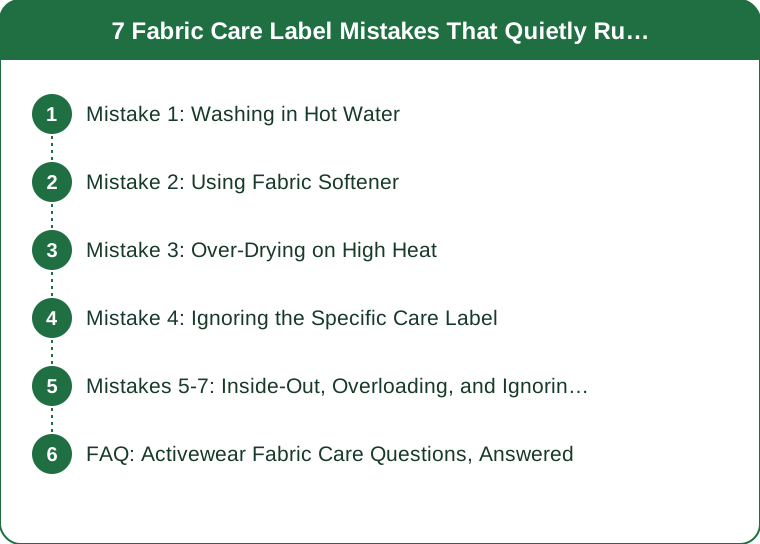
Mistake 1: Washing in Hot Water
Hot water breaks down the elastane (spandex) fibers that give activewear its stretch, causing permanent loss of elasticity over repeated hot washes. Cold or lukewarm water preserves stretch fibers far longer and is sufficient for cleaning most sweat and odor from synthetic activewear fabric.
Mistake 2: Using Fabric Softener
Fabric softener coats fibers with a waxy residue that clogs the moisture-wicking channels built into technical activewear fabric, reducing its ability to pull sweat away from skin. This is one of the most common and most damaging mistakes, since fabric softener feels like a reasonable, even beneficial laundry step for regular clothing.
Mistake 3: Over-Drying on High Heat
High heat in the dryer, similar to hot water, degrades elastane fibers and can also warp the fabric’s structure over repeated cycles. Air-drying or using a low-heat, shorter dryer cycle preserves both stretch and shape significantly better over the long run.

Mistake 4: Ignoring the Specific Care Label
Generic ‘wash cold, tumble dry low’ habits don’t always match a specific piece’s actual care label, which sometimes calls for hand-washing, mesh bag washing, or air-drying only, particularly for compression or seamless pieces with more delicate construction. Skipping the label because it ‘seems the same as other activewear’ is a common shortcut that shortens lifespan on more delicate pieces.
Mistakes 5-7: Inside-Out, Overloading, and Ignoring Early Damage
Mistake 5 — Washing Inside-Out Inconsistently: Washing activewear right-side-out exposes printed designs and higher-friction fabric surfaces directly to the agitation of the wash cycle, accelerating pilling and fading. Consistently washing inside-out reduces this surface friction and preserves appearance longer.
Mistake 6 — Overloading the Washing Machine: A packed load doesn’t allow water and detergent to properly circulate and rinse out sweat, oils, and detergent residue, which can build up in fabric over time and contribute to odor retention and fabric breakdown. Smaller, less crowded loads improve both cleaning and longevity.
Mistake 7 — Ignoring Early Pilling or Snags: A small snag or early pilling left unaddressed tends to worsen with each wash cycle, as the compromised fibers catch further during agitation. Trimming loose threads promptly and using a fabric shaver on early pilling meaningfully slows further degradation.
FAQ: Activewear Fabric Care Questions, Answered
Does washing activewear less frequently help it last longer?
Up to a point — avoiding unnecessary washing (like rewearing a barely-worn piece rather than automatically washing after one light use) reduces overall wear-and-tear cycles, though sweat left too long between washes creates its own hygiene and odor issues.
Is air-drying really necessary for all activewear, or just some pieces?
High-performance compression pieces and anything with printed or bonded seams benefit most from air-drying, while more basic cotton-blend activewear tolerates low-heat tumble drying reasonably well.
What’s the single most damaging habit if only one can be changed?
Switching from hot to cold water washing is generally considered the single highest-impact change, since heat damage to elastane fibers is one of the most significant and irreversible causes of activewear losing its stretch and fit over time.
TL;DR:
- Hot water and high dryer heat both degrade elastane fibers and permanently reduce stretch
- Fabric softener clogs moisture-wicking fibers, undermining a core function of technical fabric
- Washing inside-out and avoiding overloaded loads both reduce fading and pilling
- Addressing small snags and pilling early prevents them from worsening with each wash
A few laundry habit changes meaningfully extend activewear lifespan without requiring any new purchases.
Keep Reading
This article is for general informational and styling purposes only. Fit, sizing, and product availability may vary.