7 Fabric Tests You Can Do at Home Before Committing to New Leggings
Quick Answer: Seven quick checks — the stretch-recovery test, the light test, the pull test, the pilling test, the seam check, the compression test, and the smell test after light activity — catch most fabric quality problems that would otherwise only show up after weeks of wear.

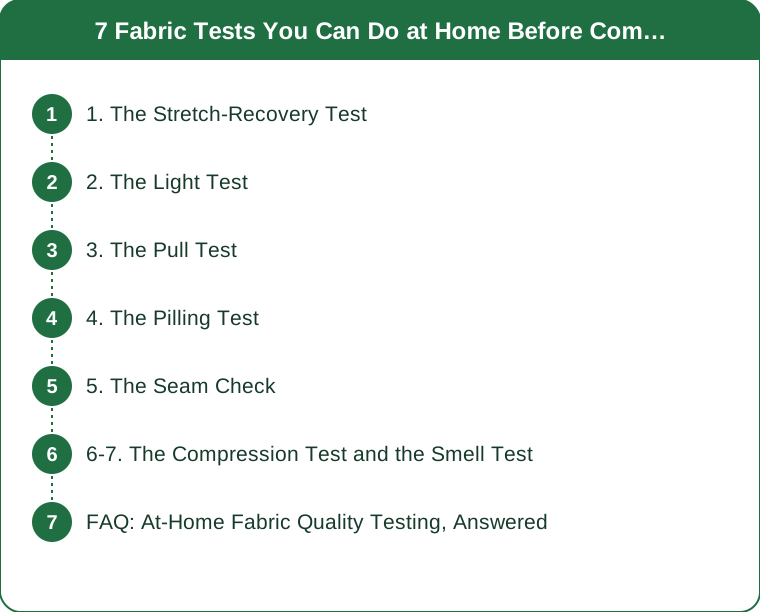
1. The Stretch-Recovery Test
Stretch a small section of fabric firmly and release it. Quality fabric snaps back to its original shape almost immediately; lower-quality fabric stays slightly stretched or takes a few seconds to recover. Fabric that doesn’t recover well now will sag noticeably after a few wash cycles.
2. The Light Test
Hold the fabric up to a bright light or window and check for see-through spots, especially across the seat and thigh areas where stretch is greatest during squats or lunges. This single test catches the most common legging complaint before you ever leave the fitting room.
3. The Pull Test
Gently but firmly pull the fabric in different directions (not just the main stretch direction). Fabric that feels thin, loose, or slightly translucent under multi-directional pull tends to wear out and lose shape faster than fabric that stays consistently dense under pressure from any angle.

4. The Pilling Test
Rub a small area of fabric against itself firmly for about 10 seconds. Fabric that immediately starts forming small fuzzy balls (pills) is more prone to pilling with normal wear and washing — a strong early predictor of how the fabric will look after a month of regular use.
5. The Seam Check
Examine seams, especially at high-stress points like the crotch and waistband, for flat, even stitching without loose threads or puckering. Poorly finished seams are one of the most common failure points in lower-quality activewear, often failing before the fabric itself does.
6-7. The Compression Test and the Smell Test
6. The Compression Test
Waistband and any compression panels should feel firm without digging in immediately when tried on. A waistband that feels tight and uncomfortable in the fitting room will only get worse after a wash cycle or two, as elastic tends to lose a small amount of give with use, not gain it.
7. The Smell Test After Light Activity
If possible, do a few light movements (squats, jogging in place) while trying the item on. Fabric that starts smelling noticeably after just a few minutes of light activity often lacks effective moisture-wicking or anti-microbial treatment, a pattern that gets worse, not better, over the life of the garment.
FAQ: At-Home Fabric Quality Testing, Answered
Can you do these tests on fabric through online photos before buying?
Not reliably — most of these tests require physical contact, which is part of why return policies matter more for activewear than many other categories.
Is a higher price always a sign of passing these tests?
Not automatically — price doesn’t guarantee quality, and some higher-priced pieces still fail the light or pilling test, so it’s worth checking regardless of price point.
How many of these 7 tests should a good pair of leggings pass?
Ideally all seven, but the stretch-recovery, light, and seam checks are the three most predictive of long-term quality if you only have time for a few.
TL;DR:
- The stretch-recovery and light tests catch the two most common legging complaints
- Multi-directional pulling and pilling tests predict how fabric holds up over time
- Seam quality at stress points often fails before the fabric itself does
- A quick light-activity smell test reveals moisture-wicking performance before you buy
Seven quick checks in the fitting room save a lot of disappointment weeks down the line — none of them take more than a minute.
See It in Motion
Seen here: Super High Waist Embossed Yoga Leggings with Inner Pocket — shop it on bubblelime.com
Keep Reading
This article is for general informational and styling purposes only. Fit, sizing, and product availability may vary.