7 Things Your Activewear Fabric Tag Doesn't Tell You (But Should)
Quick Answer: A fabric tag lists fiber percentages but says nothing about weave density, recovery rate, or how it’ll perform after 50 washes — the numbers that actually predict long-term feel and durability. Checking GSM, brand-specific compression claims, and wash-care instructions together fills in most of the gap.
You check the tag, see “88% polyester, 12% spandex,” and assume that tells you what you need to know. It doesn’t — that same fiber blend can produce wildly different-feeling fabric depending on seven variables the tag never mentions.
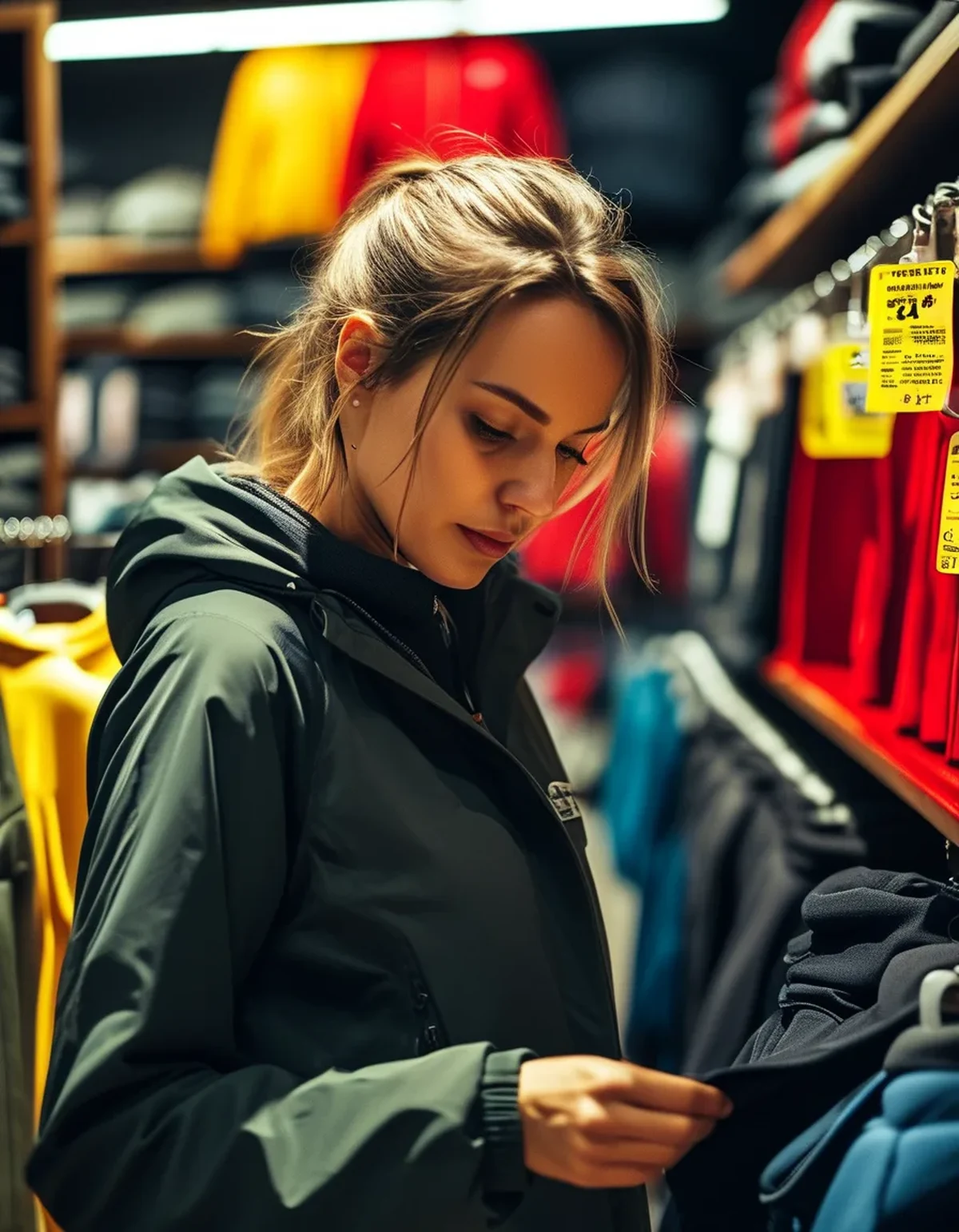
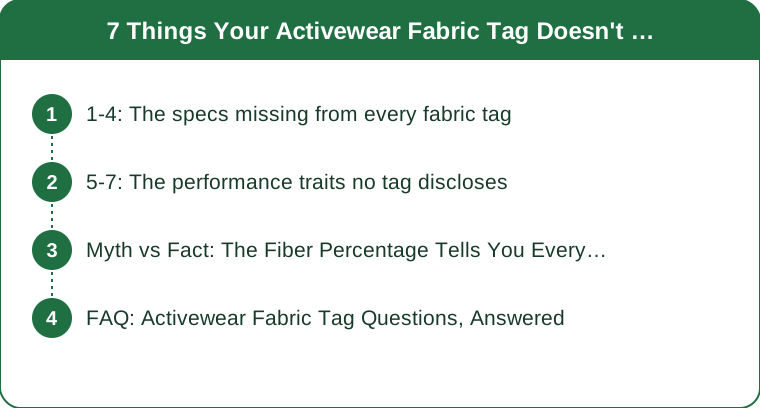
1-4: The specs missing from every fabric tag
1. Weave density isn’t on the tag
Two fabrics with identical fiber percentages can feel completely different depending on how tightly the fibers are woven or knit — a denser weave resists see-through and pilling far better than a loose one, but this number almost never appears on a label.
2. GSM (fabric weight) is often missing entirely
Grams per square meter is the single best predictor of how substantial a fabric feels and how opaque it is under stretch, yet most brands only mention it in product descriptions, not on the actual care tag, if at all.
3. Recovery rate after stretching isn’t disclosed
How well a fabric snaps back after being stretched during a squat or lunge determines whether leggings sag by month three — this is a spandex-percentage-adjacent quality that the percentage alone doesn’t fully predict, since spandex quality varies by supplier.
4. Colorfastness after washing is a guess
Tags say “wash cold” but don’t indicate how much color loss to expect even when you follow instructions exactly — this varies significantly by dye process and isn’t standardized information consumers have access to.
5-7: The performance traits no tag discloses
5. Odor-retention tendency isn’t mentioned
Some synthetic blends trap bacteria (and resulting odor) more than others even at identical fiber percentages, based on fiber cross-section shape at a microscopic level — information no tag discloses.
6. Pilling resistance depends on fiber length, not just type
Longer synthetic fibers pill less than short ones blended at the same percentage, but fiber length is a manufacturing detail that never appears on consumer-facing tags.
7. UPF (sun protection) often isn’t listed unless marketed specifically
Fabric weight and weave density both affect actual UV protection, but unless a brand specifically markets a piece as UPF-rated, this protective quality goes completely undisclosed even though it’s present to some degree in nearly all opaque activewear.
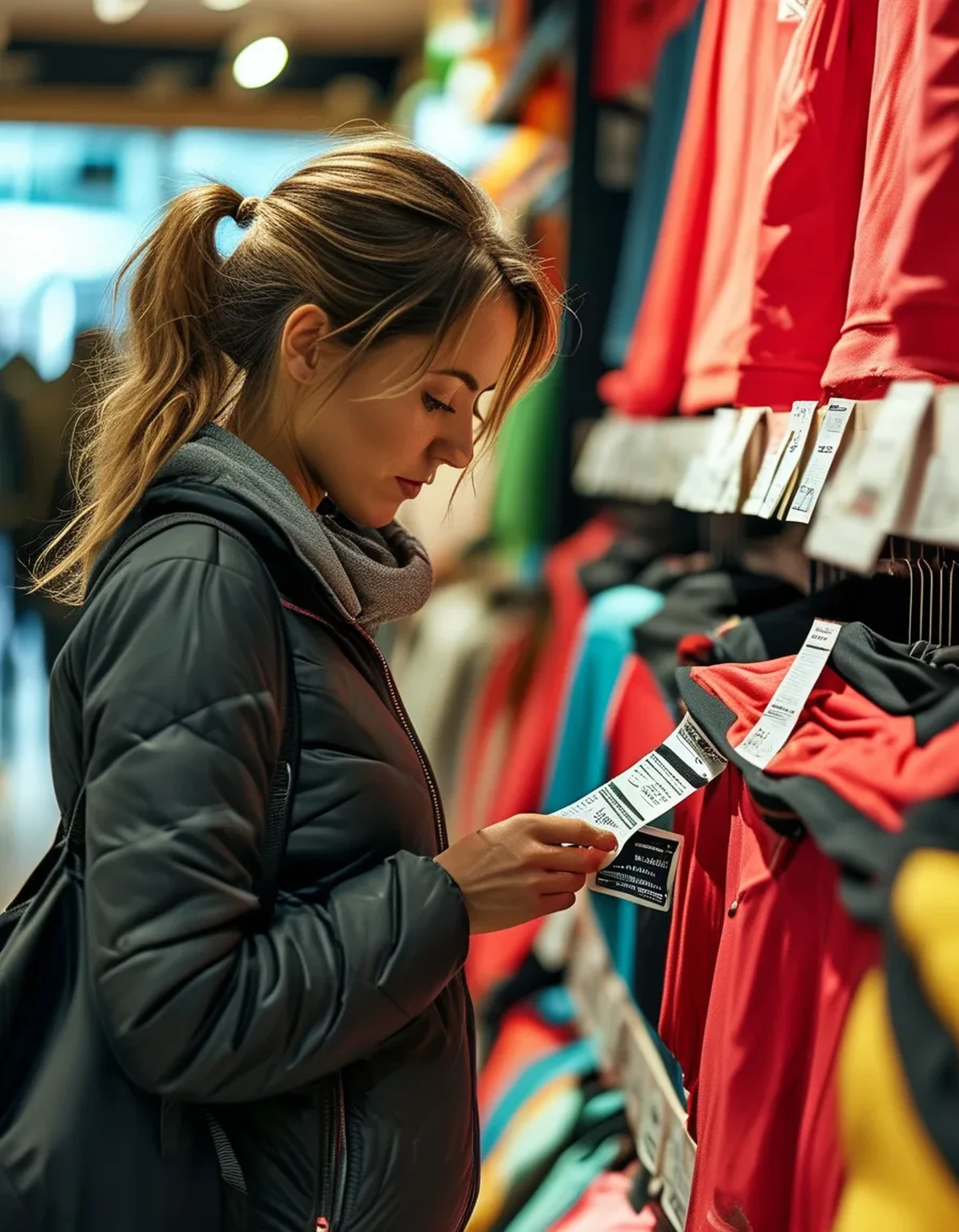
Myth vs Fact: The Fiber Percentage Tells You Everything
Myth: 88/12 poly-spandex from two different brands will perform identically. Fact: Weave density, GSM, and fiber quality vary enormously within the same percentage blend — the number is a starting point, not the full picture.
Myth: A higher spandex percentage always means better stretch recovery. Fact: Spandex quality and how it’s woven in matters more than raw percentage — a lower-percentage, well-engineered blend can outperform a higher-percentage, poorly woven one.
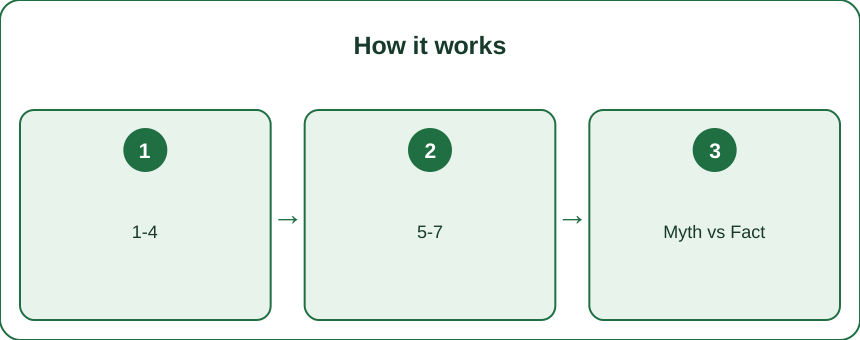
FAQ: Activewear Fabric Tag Questions, Answered
Where can I actually find GSM if it’s not on the tag?
Check the brand’s online product description or reach out to customer service directly — some brands disclose it there even when it’s absent from the physical label.
Does price correlate with these hidden fabric qualities?
Loosely, but not reliably — some mid-priced brands invest heavily in weave quality while some premium brands charge more for branding rather than fabric engineering, so price alone isn’t a safe proxy.
Is there a quick in-store test for several of these at once?
The stretch-and-recovery test (stretch a section and watch how fast and fully it snaps back) is the closest single test, since it indirectly reflects weave density, spandex quality, and fiber length all at once.
TL;DR:
- Fiber percentage alone doesn’t predict weave density, GSM, or recovery rate
- GSM and colorfastness performance are rarely disclosed on the tag itself
- Odor retention and pilling resistance depend on fiber details tags don’t mention
- The stretch-and-recovery test in-store is the fastest proxy for several hidden qualities at once
Keep Reading
This article is for general informational and styling purposes only. Fit, sizing, and product availability may vary.