7 Fabric Blend Percentages on Activewear Tags — What They're Actually Telling You
Quick Answer: Nylon-dominant blends (75%+ nylon) tend to feel softer and more compressive, polyester-dominant blends dry faster and hold color better, and elastane percentage (ideally 8-12% for leggings) controls stretch and recovery — reading these three numbers together tells you more than any marketing description on the tag.
Most people glance past the fabric percentage line entirely, but it’s actually the most honest piece of information on the whole label.
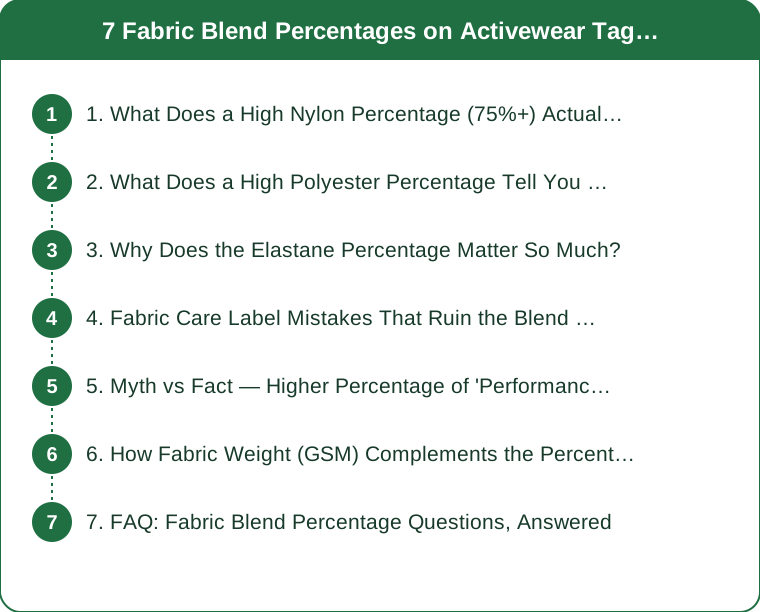
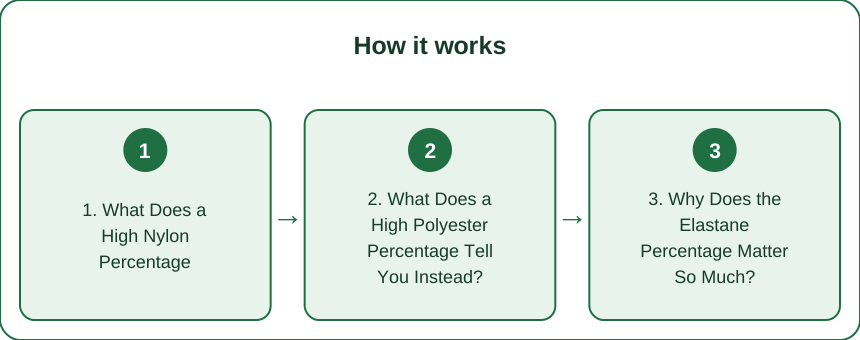
1. What Does a High Nylon Percentage (75%+) Actually Tell You?
Nylon has a naturally softer hand-feel and tends to create a more compressive, second-skin fit, which is why higher-end leggings often lean nylon-heavy. It also resists pilling slightly better than polyester over time. The tradeoff: nylon dries slower than polyester and can hold onto odor more if not washed promptly after sweating.
2. What Does a High Polyester Percentage Tell You Instead?
Polyester-dominant blends dry noticeably faster, which matters for anyone doing back-to-back workouts or humid-climate training, and they hold dye and color better over repeated washes — this is part of why polyester-heavy activewear tends to resist the gray-black fading that affects nylon blends faster. The tradeoff is a slightly less soft, sometimes more plasticky feel against skin compared to nylon.
3. Why Does the Elastane Percentage Matter So Much?
Elastane (spandex) is the stretch-and-recovery ingredient, and 8-12% is the sweet spot for most leggings — enough for real compression and shape recovery without compromising durability, since elastane itself degrades faster than nylon or polyester with washing and heat exposure. Below 5%, fabric tends to feel more like a woven pant than true activewear; above 15%, garments can feel overly tight-clinging and may degrade faster since there’s simply more of the more fragile fiber present.
4. Fabric Care Label Mistakes That Ruin the Blend Fastest
Hot washing and high-heat drying are the two biggest accelerants of elastane breakdown, regardless of what the nylon-to-polyester ratio is. Fabric softener is another quiet culprit — it coats synthetic fibers in a way that can reduce moisture-wicking performance over time, working directly against what you likely bought technical fabric for in the first place.
5. Myth vs Fact — Higher Percentage of ‘Performance Fiber’ Always Means Better Quality
Myth: a higher stated percentage of a named performance fiber (like recycled nylon or a branded fabric tech) automatically means higher quality. Fact: knit density and construction quality matter just as much as the raw fiber percentage — a well-constructed 80/20 blend from a quality manufacturer can outperform a poorly knitted 90/10 blend, since percentage alone doesn’t capture how tightly or evenly the fabric is actually woven.
6. How Fabric Weight (GSM) Complements the Percentage Numbers
Grams per square meter (GSM), when listed, tells you fabric density independent of the fiber blend — 220gsm+ is generally considered durable for leggings meant for regular workout use, while anything under 180gsm tends to feel thinner and show more wear faster, even with an otherwise ideal fiber percentage blend.
7. FAQ: Fabric Blend Percentage Questions, Answered
Is a 100% recycled polyester blend automatically more durable?
Recycled fibers perform comparably to virgin fibers in most modern activewear — the recycling process itself doesn’t inherently reduce durability, though overall construction quality still matters more than the recycled claim alone.
Why do some brands not list elastane percentage at all?
Some brands bundle it into a proprietary fabric name without breaking out percentages — if this bothers you, brands that do list full percentages transparently are generally worth favoring for exactly this reason.
Does a higher elastane percentage mean better squat-proof coverage?
Not directly — squat-proof opacity is more about knit density and fabric weight than elastane percentage specifically, so check for GSM or an explicit ‘squat-proof tested’ claim instead.
TL;DR:
- Nylon-heavy blends feel softer and more compressive; polyester-heavy blends dry faster and resist fading better
- 8-12% elastane is the sweet spot for stretch and recovery in leggings
- Hot washing and fabric softener degrade performance regardless of the blend percentages
- Percentage alone doesn’t capture knit quality — GSM and construction matter just as much
Next time you’re deciding between two similar-looking leggings, flip to the fabric tag first — it’s more honest than the marketing copy on the front.
See It in Motion
Seen here: High Waist Yoga Leggings with Inner Pocket — shop it on bubblelime.com
Keep Reading
This article is for general informational and styling purposes only. Fit, sizing, and product availability may vary.