Does the Exact Fabric Blend Percentage on an Activewear Label Actually Matter?
Quick Answer: Yes — the spandex/elastane percentage (typically 5-20%) directly determines stretch and recovery, while the base fiber percentage (polyester, nylon, or cotton) determines moisture-wicking, durability, and breathability, so reading these numbers actually predicts real performance differences, not just marketing detail.
Those small-print percentages on an activewear tag look like technical noise most people skip past. They’re actually one of the more reliable predictors of how a piece will perform, more useful than the brand name or price point alone.
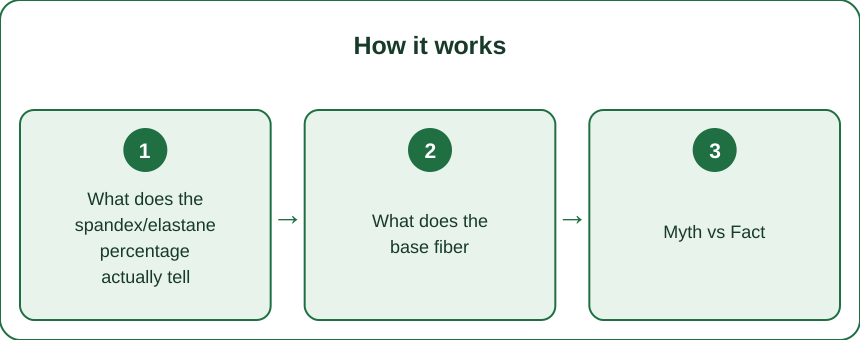
What does the spandex/elastane percentage actually tell you?
Higher spandex percentage (15-20%) means more stretch and better shape recovery — the fabric snaps back to its original shape better after stretching, which matters for high-movement activities like squatting or running where fabric needs to move with you repeatedly without sagging.
Lower spandex percentage (5-8%) means less stretch but often more structure and durability — this can be preferable for looser-fit pieces or items where you want the fabric to hold a shape rather than closely follow every movement.
What does the base fiber (polyester vs. nylon vs. cotton) actually change?
Polyester is generally the most moisture-wicking and quick-drying of the common base fibers, making it a strong choice for high-sweat activities. Nylon tends to feel softer and more silky against skin, with slightly better recovery from repeated stretching, but can dry a bit slower than polyester.
Any cotton content, even a small percentage, meaningfully reduces moisture-wicking performance — cotton absorbs and holds moisture rather than moving it away from skin, which is why cotton-blend activewear performs noticeably worse for sweat-heavy workouts specifically.
Myth vs Fact: Fabric Percentage Labels
Myth: Higher spandex percentage always means a ‘better’ fabric. Fact: More spandex isn’t universally better — it depends on the use case; a looser, less compressive piece may intentionally use lower spandex for a different feel and fit purpose.
Myth: Two leggings with the same percentage blend will perform identically. Fact: Fabric weight, knit construction, and fiber quality also affect performance significantly — the percentage blend is one predictive factor among several, not the only one.
Myth: Percentage labels are marketing fluff without real technical meaning. Fact: These percentages are regulated, verified textile content disclosures, not marketing copy — they reflect actual material composition.
What Nobody Tells You About Reading Fabric Labels
A blend with 90%+ polyester and around 10% spandex is a reliable ‘workhorse’ formula for general activewear across most activities — it’s worth learning this rough benchmark, since deviations toward much higher or lower spandex usually signal a piece designed for a more specific purpose (high compression versus loose-fit comfort).
Also underrated: the order fibers are listed on a label indicates their proportion, with the first-listed fiber being the majority component — a quick, reliable way to gauge a piece’s dominant characteristic at a glance.
How should you actually use this information when shopping?
For high-sweat, high-movement workouts: look for polyester or nylon-dominant blends with 12-20% spandex. For loose-fit, low-movement wear: lower spandex percentages (5-10%) are fine and may fit your intended use better. For any high-sweat activity: avoid or minimize cotton content specifically, regardless of the rest of the blend.
TL;DR:
- Spandex percentage predicts stretch and recovery; base fiber predicts moisture-wicking and durability
- Higher spandex isn’t universally ‘better’ — it depends on the piece’s intended use
- Any cotton content meaningfully reduces moisture-wicking for sweat-heavy workouts
- A 90% polyester/10% spandex blend is a reliable general-purpose benchmark to know
Those small-print percentages are genuinely predictive — worth a quick check before buying.
See It in Motion
Seen here: High Waist 8” Yoga Shorts — shop similar styles on bubblelime.com
Keep Reading
This article is for general informational and styling purposes only. Fit, sizing, and product availability may vary.