Recycled Polyester Activewear: Does It Perform the Same as Virgin Poly?
Recycled polyester activewear is everywhere on labels now, usually with a quiet assumption that it performs identically to virgin polyester. Mostly true, but not entirely — the recycling process changes fiber length in ways that show up in three specific places: stretch recovery, pilling rate, and colorfastness.

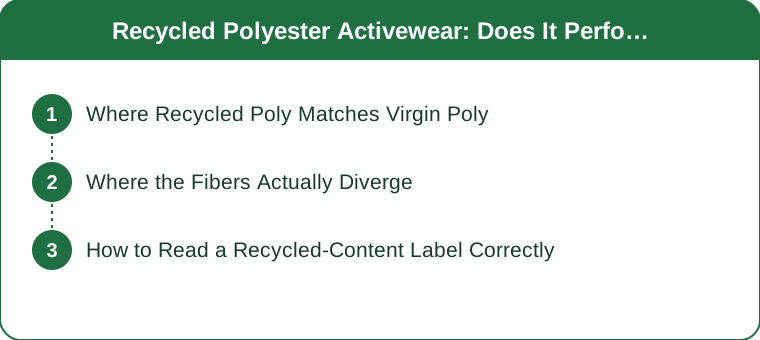
Where Recycled Poly Matches Virgin Poly
The equal ground: the the-base-polymer-is-identical (the rPET and virgin PET sharing the same chemical structure post-processing, per general textile-chemistry data — the meaning moisture-wicking and quick-dry behavior are unaffected), the the-strength-per-thread (the tensile strength testing near-identical between the two when fiber length is controlled for), the the-dye-uptake-similarity (the color saturation matching in most mid-weight blends).

Where the Fibers Actually Diverge
The real gap: the shorter-fiber-average (the mechanical recycling process shortening some fiber strands compared to virgin extrusion, per general fiber-science reporting — the meaning slightly higher pilling risk in high-friction zones like inner thighs), the the-batch-consistency-variance (the recycled-fiber sourcing pulling from mixed post-consumer streams, producing more lot-to-lot texture variation than virgin poly), the the-recovery-curve-softening (the elastane-blend recovery testing marginally faster fatigue in heavily recycled-content leggings after 100+ wash cycles).
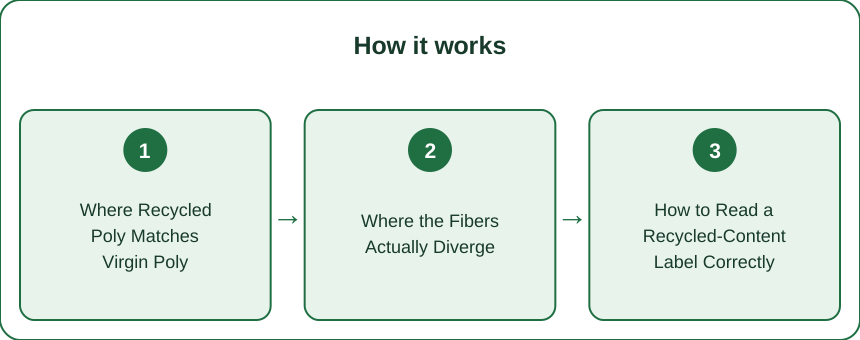
How to Read a Recycled-Content Label Correctly
The practical filter: the the-percentage-matters-more-than-the-word (the ‘100% recycled polyester’ performing closer to virgin than a vague ‘made with recycled materials’ claim, which can mean as little as 20%), the the-blend-ratio-check (the elastane percentage mattering more for recovery than the polyester’s origin), and the frame (buy on percentage-and-blend specifics, not the recycled label alone).
Recycled polyester activewear is not a downgrade — the base fiber performs nearly identically to virgin polyester in wicking, strength, and color. The differences that do exist are narrow and specific: slightly higher pilling risk from shorter recycled fiber strands, more batch-to-batch texture variance, and marginally faster recovery fatigue in heavily blended pieces after extended wash cycles. None of that is a reason to avoid recycled fabric — it’s a reason to read past the word ‘recycled’ to the actual percentage and elastane blend on the tag. A 100%-recycled polyester paired with a solid elastane ratio will outperform a vague ‘partially recycled’ virgin-blend claim almost every time. The label language is doing less work than the numbers next to it.
See It in Motion
Seen here: Super High Waist Embossed Yoga Leggings with Inner Pocket — shop it on bubblelime.com
Keep Reading
This article is for general informational and styling purposes only. Fit, sizing, and product availability may vary.