Why Some Activewear Gets Static-Clingy in Winter and Others Don't
Quick Answer: Fabrics with a high percentage of synthetic fiber (polyester, nylon) and minimal natural fiber blend are considerably more prone to static buildup in cold, dry winter air, since synthetic fibers hold a static charge more readily than natural fibers like cotton, which conduct and dissipate charge more effectively — a small percentage of natural fiber blended in, or a specific anti-static finish, meaningfully reduces this effect.
Checking fiber content specifically for winter activewear purchases is a more reliable static-prevention strategy than any dryer trick after the fact.

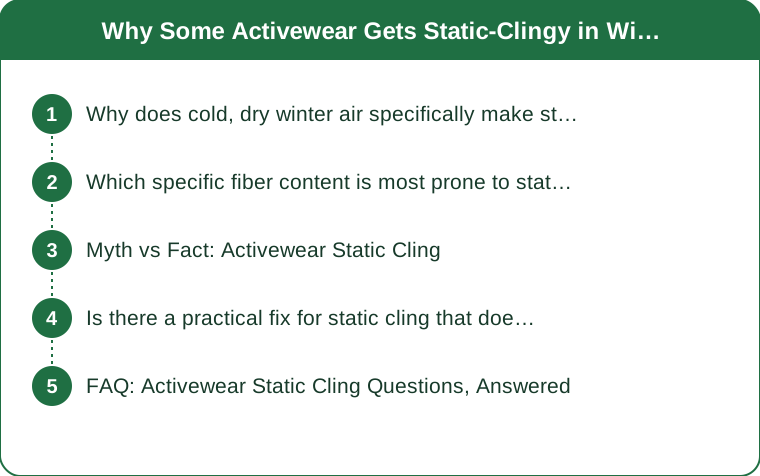
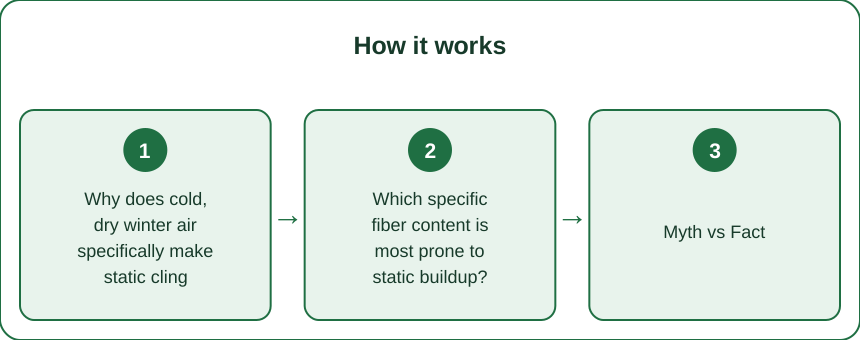
Why does cold, dry winter air specifically make static cling worse?
Static charge builds up more easily in low-humidity air because there’s less moisture in the air to help dissipate the electrical charge that friction generates between fabric layers or against skin, which is why the exact same leggings that feel fine in humid summer air can cling noticeably in dry winter conditions.
This is a genuine environmental factor independent of the fabric itself, which is why even naturally lower-static fabrics can show some increased cling in particularly dry indoor heating conditions.
Which specific fiber content is most prone to static buildup?
100% polyester or nylon fabrics, especially in a smooth, tightly woven finish, hold static charge considerably more than fabrics blended with natural fibers like cotton or fabrics treated with a specific anti-static finish, since synthetic fibers are inherently less conductive and don’t dissipate the charge as effectively.
This is why a legging blend listing even 5-10% natural fiber, or a garment specifically labeled with an anti-static treatment, tends to perform noticeably better in winter conditions than a pure synthetic equivalent.

Myth vs Fact: Activewear Static Cling
Myth: Any fabric softener eliminates static cling from activewear. Fact: Standard fabric softener can coat and degrade moisture-wicking finishes, so it’s often specifically advised against for performance activewear.
Myth: Static cling is purely about the specific brand’s manufacturing quality. Fact: Fiber content and ambient humidity are the primary drivers, largely independent of brand.
Myth: Natural fiber activewear never has any static issues. Fact: Even natural-fiber-blend activewear can show some static in extremely dry conditions, just meaningfully less than pure synthetic.
Is there a practical fix for static cling that doesn’t involve buying different leggings?
A light mist of water on the fabric, a dedicated anti-static spray, or simply increasing indoor humidity with a humidifier during dry winter months all meaningfully reduce static cling on existing garments, without needing to replace them.
Rubbing a dryer sheet directly against the fabric just before wearing is another commonly used quick fix, though it should be used sparingly on moisture-wicking activewear since heavy dryer sheet residue can affect the fabric’s wicking performance over repeated use.
FAQ: Activewear Static Cling Questions, Answered
Does washing activewear in cold water reduce static compared to warm water?
Washing temperature has a smaller effect on static than fiber content and drying method; over-drying in a hot dryer tends to increase static more than wash water temperature does.
Do anti-static sprays affect moisture-wicking performance?
Most anti-static sprays formulated for activewear specifically are designed not to interfere with wicking, though heavy, non-specialized sprays can leave residue that affects performance over time.
Is static cling worse on newer activewear or does it fade with more washes?
Some synthetic activewear actually shows slightly reduced static after multiple washes as factory finishes wear down, though this varies by specific fabric and finish.
TL;DR:
- Cold, dry winter air is the environmental trigger, but fiber content determines how bad the cling actually gets
- Pure synthetic fabrics (polyester, nylon) hold static charge more than natural-fiber blends or anti-static finishes
- Standard fabric softener isn’t recommended for performance activewear despite being a common static fix elsewhere
- Light water misting, anti-static spray, or indoor humidity control are practical fixes for existing garments
Checking fiber content before a winter purchase prevents the problem more reliably than fixing it after the fact.
See It in Motion
Seen here: High Waist Yoga Leggings with Side Pockets — shop it on bubblelime.com
Keep Reading
This article is for general informational and styling purposes only. Fit, sizing, and product availability may vary.