Recycled Activewear Fabrics: Does Eco Perform?
Recycled fabrics colonized activewear labels — the bottles-into-leggings story on every third tag — and buyers quietly wonder: does eco perform, or is it a compromise wearing a halo? The honest answer: parity, mostly, with fine print worth reading.

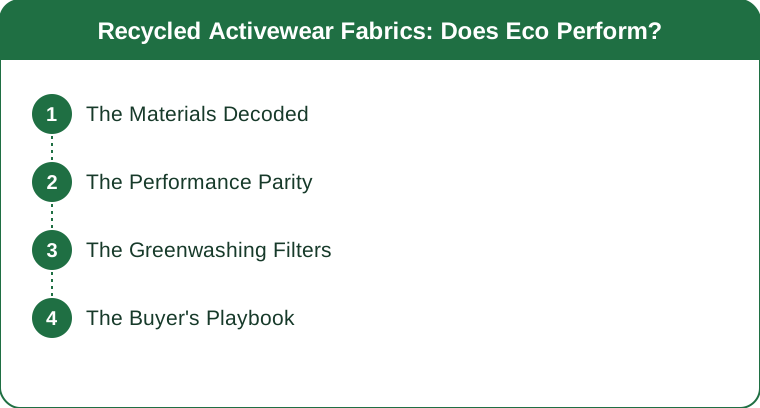
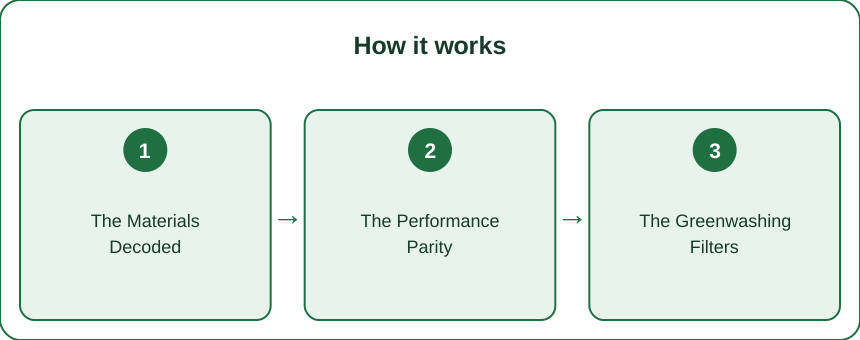
The Materials Decoded
What recycled actually means: recycled polyester (rPET — mostly from plastic bottles, mechanically or chemically reprocessed into fiber; the dominant recycled activewear input), recycled nylon (often from fishing nets and carpet — the regenerated-nylon tier with the strongest story and pricing), the percentage honesty (the ‘30% recycled’ blend is common — the label’s number matters; ‘100% recycled polyester’ and ‘contains recycled materials’ are different products), and the elastane asterisk (the stretch component is rarely recycled — the fully-circular legging doesn’t quite exist yet; the recycled claim covers the main fiber).
The Performance Parity
Does it perform: the fiber-property truth (well-processed recycled polyester and nylon are chemically the same polymers — wicking, drying and durability land at parity in quality implementations; your skin cannot tell), the quality-variance honesty (cheap recycled processing can yield weaker fibers — but cheap virgin processing does too; the brand’s construction quality predicts performance far better than the recycled flag), the feel test (the buttery and compressive tiers both exist in recycled versions now — the fabric families translated intact), and the verdict (buy recycled on equal footing — judge the garment by the fabric-lab standards, and let the recycled content be the tiebreaker, not the excuse).
The Greenwashing Filters
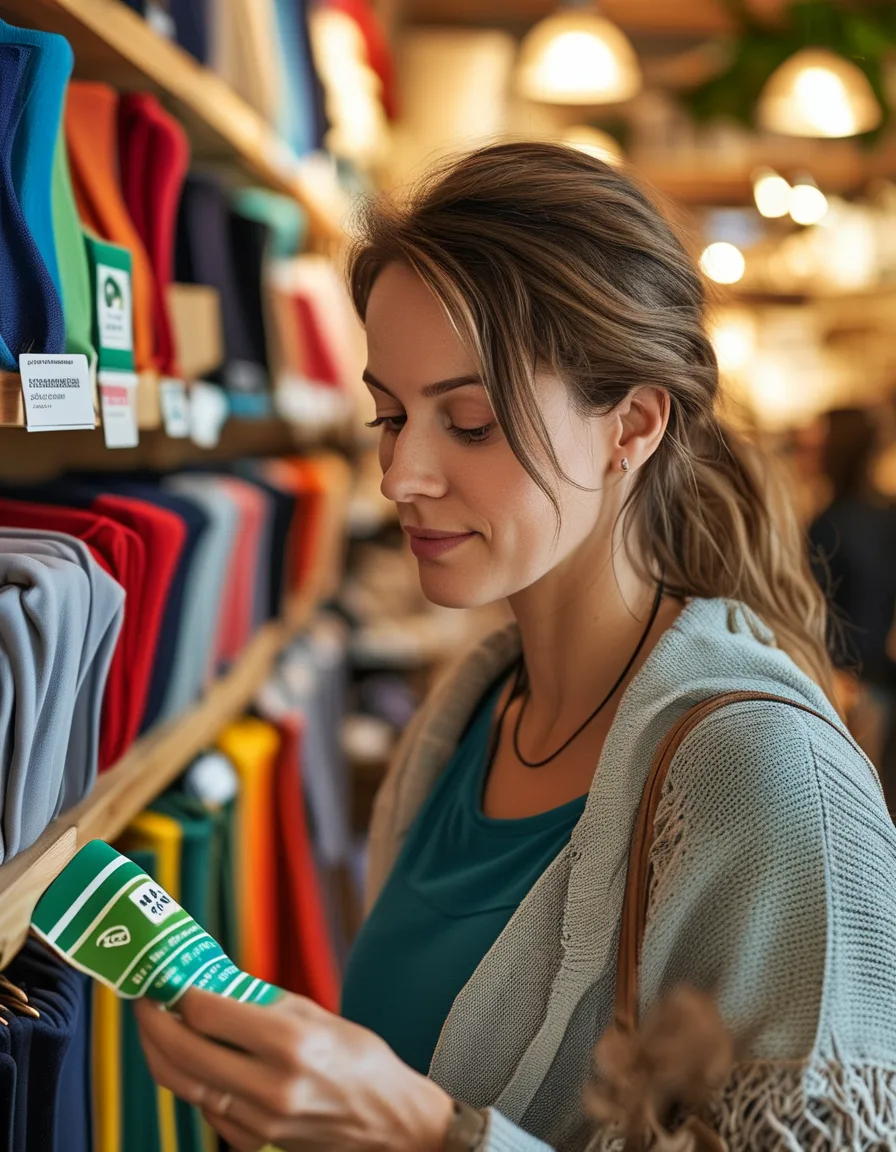
Reading past the halo: the certification shortlist (GRS — Global Recycled Standard — and similar third-party marks verify content claims; the self-declared ‘eco-friendly’ with no numbers is vibes), the single-swap flag (the brand with one recycled capsule collection and a fast-fashion drop cadence is marketing sustainability, not practicing it — the anti-haul chapter’s volume math outranks any fabric), the microplastic honesty (recycled polyester sheds microfibers exactly like virgin — the wash-bag and cold-wash mitigation applies regardless; recycled is a sourcing win, not a shedding fix), and the durability-is-sustainability principle (the recycled legging that pills out in a season loses to the virgin one worn five years — lifespan is the greenest spec on any label).
The Buyer’s Playbook
The practical protocol: buy the garment first, the story second (fit, opacity, construction — the standard exam; recycled content breaks ties), verify the number (the percentage and the certification over the leaf graphic), support the structural players (brands with take-back programs, repair services and recycled MAJORITIES across the line — the practicing-versus-marketing distinction), and keep the hierarchy honest (fewer-better purchases beat perfectly-sourced excess — the recycled label on the fourth unnecessary set is a rounding error; the fabric matters, the volume matters more). Eco performs — the label just needs the same scrutiny as the seams.
Same polymers at quality, check the percentage and cert, wash-bag still needed, durability is the greenest spec. Recycled activewear reached parity — judge the garment, verify the story, buy less overall.
See It in Motion
Seen here: High Waist Yoga Leggings with Inner Pocket — shop it on bubblelime.com
Keep Reading
This article is for general informational and styling purposes only. Fit, sizing, and product availability may vary.