7 Fabric Terms on Activewear Tags That Actually Matter (And What to Ignore)
Quick Answer: Of the many terms printed on activewear tags, GSM (fabric weight), denier, elastane percentage, and moisture-wicking treatment type actually predict real-world performance, while vague marketing phrases like ‘technical fabric’ or ‘performance blend’ carry no specific, checkable meaning. Learning to spot the difference saves money on garments that look identical on the rack.
Every activewear tag reads like it was written by the same marketing department, packed with terms that sound technical but often mean very little on their own. Here are the seven that actually matter, and a few that don’t.

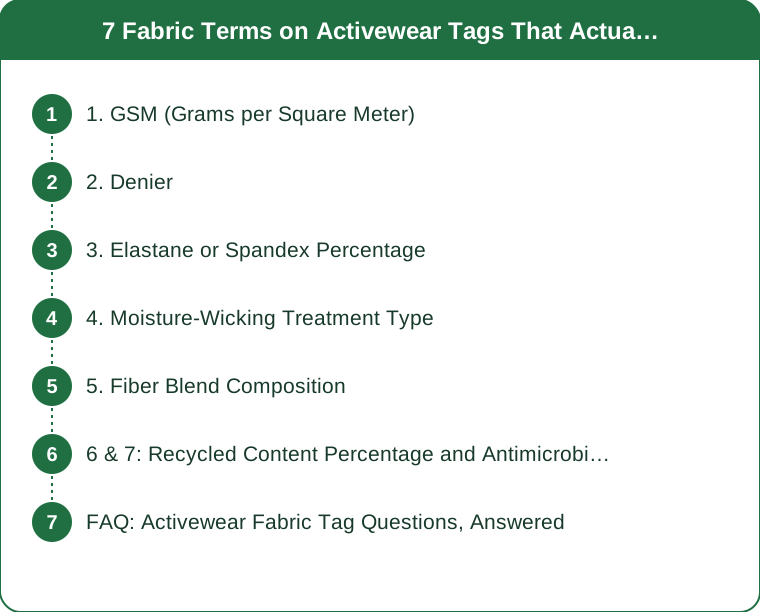
1. GSM (Grams per Square Meter)
This single number is one of the most reliable predictors of fabric weight and durability — higher GSM (usually 220+ for leggings) means a heavier, more opaque, generally longer-lasting fabric than a lower-GSM option, regardless of what else the tag claims.
2. Denier
Common on nylon-based fabrics, denier measures thread thickness — higher denier numbers indicate thicker, more snag- and pill-resistant yarn, which matters directly for how well a garment survives repeated washing and wear.
3. Elastane or Spandex Percentage
A garment listing 15-20% elastane typically retains shape and stretch recovery significantly better over time than one at 5% or less, which is worth checking specifically for leggings expected to hold their shape through repeated wear and wash cycles.

4. Moisture-Wicking Treatment Type
Some tags specify whether wicking comes from the fabric’s actual fiber structure versus a topical spray-on treatment — fiber-based wicking tends to last the life of the garment, while topical treatments wash out within months, a meaningful distinction most vague “moisture-wicking” claims don’t disclose.
5. Fiber Blend Composition
The actual percentage breakdown (say, 78% polyester / 22% elastane) is more informative than a blend name alone, since two garments both called “performance blend” can have very different actual ratios and very different real-world stretch and durability.
6 & 7: Recycled Content Percentage and Antimicrobial Treatment Type
6. Recycled Content Percentage
A specific number (“made from 45% recycled polyester”) is a checkable, meaningful claim, unlike unquantified language like “eco fabric” that carries no verifiable weight.
7. Antimicrobial Treatment Type
Similar to moisture-wicking, some antimicrobial treatments are built into the fiber itself and last the garment’s life, while others are a topical finish that fades within a number of washes — worth checking which type is listed if odor resistance is a priority.
FAQ: Activewear Fabric Tag Questions, Answered
Terms worth ignoring: ‘technical fabric,’ ‘performance blend,’ and ‘engineered for movement’ are common phrases with no standardized, checkable meaning behind them — they describe intent, not a specific, verifiable material property, unlike the seven terms above.
Is a higher GSM always better for activewear?
Generally yes for durability and opacity, though very high GSM can trade off some breathability, which matters more for high-heat, high-intensity workouts.
Does elastane percentage matter more than the base fiber type?
Both matter, but elastane percentage is a more direct predictor of long-term shape retention specifically, while base fiber (polyester vs nylon) affects breathability and softness more.
How can I tell if moisture-wicking is fiber-based or a topical treatment?
Tags don’t always specify directly, but fiber-based wicking is more commonly found in higher-GSM, higher-price-tier garments, while very cheap items more often rely on a topical spray that fades with washing.
TL;DR:
- GSM, denier, elastane percentage, and treatment type (wicking, antimicrobial) actually predict performance
- Recycled content percentage and fiber blend ratios are checkable — vague blend names aren’t
- ‘Technical fabric’ and ‘performance blend’ are marketing phrases with no standardized meaning
- Learning these seven terms helps compare garments that otherwise look identical on the rack
The tag has real information buried in it — it’s just mixed in with marketing language that’s designed to sound the same way without meaning much at all.
See It in Motion
Seen here: High Waist 8” Yoga Shorts — shop similar styles on bubblelime.com
Keep Reading
This article is for general informational and styling purposes only. Fit, sizing, and product availability may vary.