7 Things That Happen to Activewear Left in a Hot Car
Quick Answer: A parked car in direct August sun reaches interior temperatures of 130 to 170 degrees Fahrenheit, well above the point where elastane begins to degrade and far above the temperature at which bacteria on damp fabric multiply fastest. The damage is cumulative and mostly invisible until the garment suddenly loses its recovery. Damp kit in a hot car is the single worst storage condition activewear encounters.
Seven specific things go wrong, and six of them are avoidable with a two-minute habit.
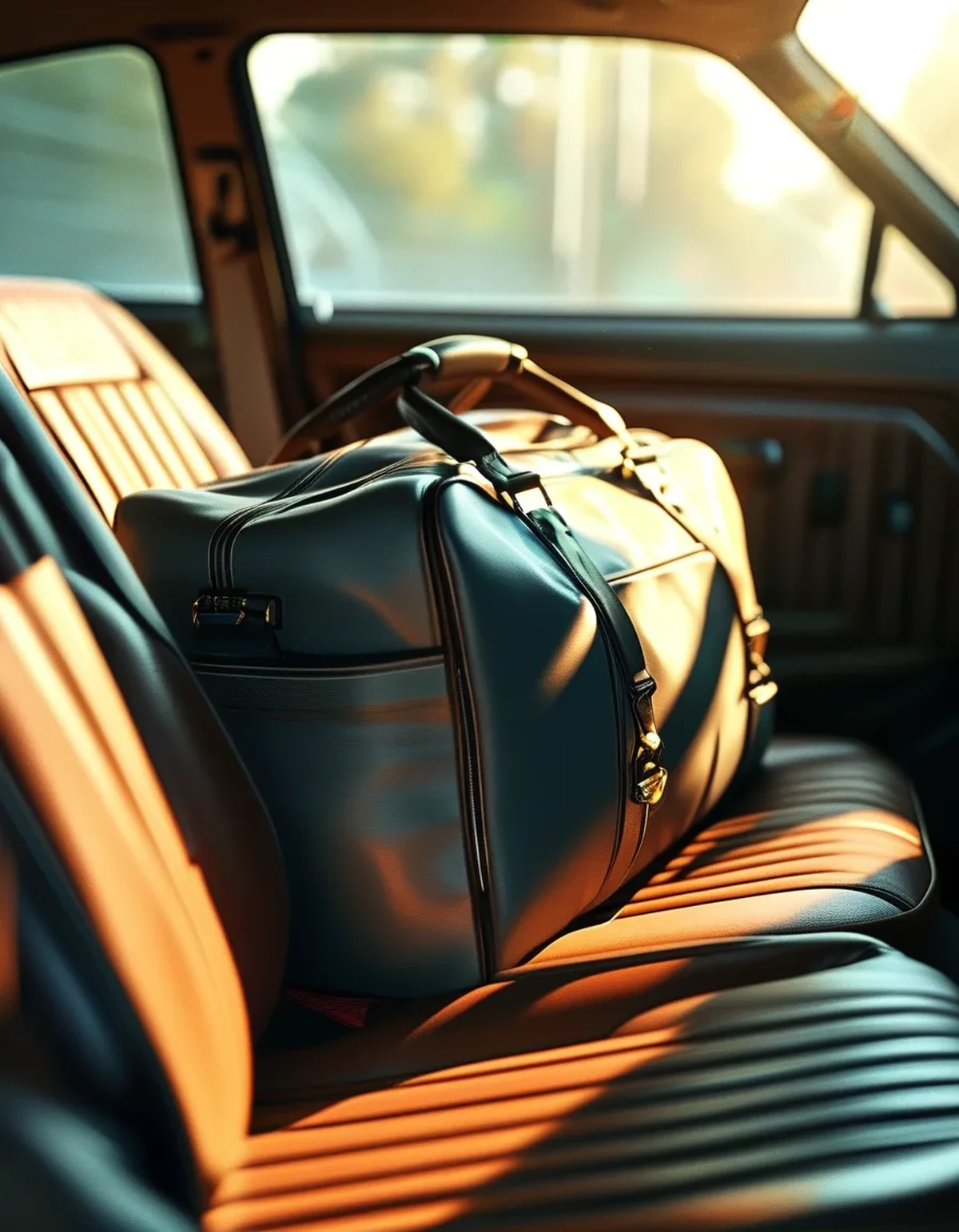
1. The elastane starts to break down
This is the one that permanently changes the garment, and it is the reason for everything else on this list.
Elastane - spandex, Lycra - is a polyurethane-based fiber whose stretch comes from long molecular chains that uncoil under load and recoil afterward. Those chains are held together by bonds that are sensitive to heat, UV, and chlorine.
Heat degradation of elastane becomes meaningful somewhere above roughly 140 degrees Fahrenheit, which is why care labels universally warn against hot drying. A car dashboard in direct August sun regularly exceeds that. A car interior more broadly sits in the 130 to 170 degree range on a hot, sunny day, and it gets there within about an hour.
What you get is not immediate visible damage. It is a small, permanent loss of recovery each time. The chains that break do not repair. After enough exposures the fabric stretches under load and does not fully return, which shows up as a waistband that no longer sits, knees that bag, and a legging that feels a size too big by mid-workout.
The frustrating part for anyone trying to diagnose it: the garment looks completely fine. Colour is intact, no pilling, no thinning. It simply stops holding its shape, and it happens gradually enough that most people blame the brand rather than the storage.
One genuinely useful reframe - the car is hotter than your dryer’s low setting. If you would not put your leggings in the dryer, do not leave them on the back seat.
2. Bacteria multiply far faster than you would expect
Damp fabric plus heat is close to an ideal growth environment, and the timeline is shorter than people assume.
Most bacteria relevant to sweaty clothing grow fastest between roughly 70 and 105 degrees Fahrenheit, and under favorable conditions many double every 20 to 30 minutes. A gym bag in a warm car sits in or near that window for hours.
The arithmetic is unforgiving. A three-hour wait at 30-minute doubling is six doublings - a 64-fold increase from the starting population. A full workday is dramatically more.
What this produces is not just smell. It is the set-in smell, the one that survives washing. That happens because bacteria produce compounds that bind to the fiber, and synthetic fibers - being oleophilic, or oil-attracting - hold onto the body oils those bacteria feed on far more tenaciously than cotton does.
The practical consequence: the difference between a top that washes clean and one that smells the moment you start sweating in it is very often just how long it spent damp and warm before it got washed.
At the extreme upper end of car temperatures, above about 140 degrees, growth actually slows because the heat becomes hostile to the bacteria too. That is not a reason to relax - by that point you have simply swapped a bacteria problem for an elastane problem.
3. Colors fade unevenly through the window
Car glass filters some UV but not all, and it filters it unevenly across the garment.
Standard windscreens are laminated and block the large majority of UVA and effectively all UVB. Side and rear windows are usually tempered rather than laminated, and they let through substantially more UVA. So the side window is the fading risk, not the windscreen.
Because the light comes from one direction and the bag blocks part of it, the fading is directional. You get a lighter panel on the side that faced the window and normal colour elsewhere. On a solid black legging this reads as a slightly rusty or brownish patch, which is the classic signature and is not reversible.
Dyes vary considerably in their light-fastness. Blacks, reds, and bright blues tend to be the most vulnerable. Heathered and marled fabrics hide it better because they are already visually varied.
Heat accelerates the photodegradation, so a hot car is worse than a cool windowsill for the same amount of light.
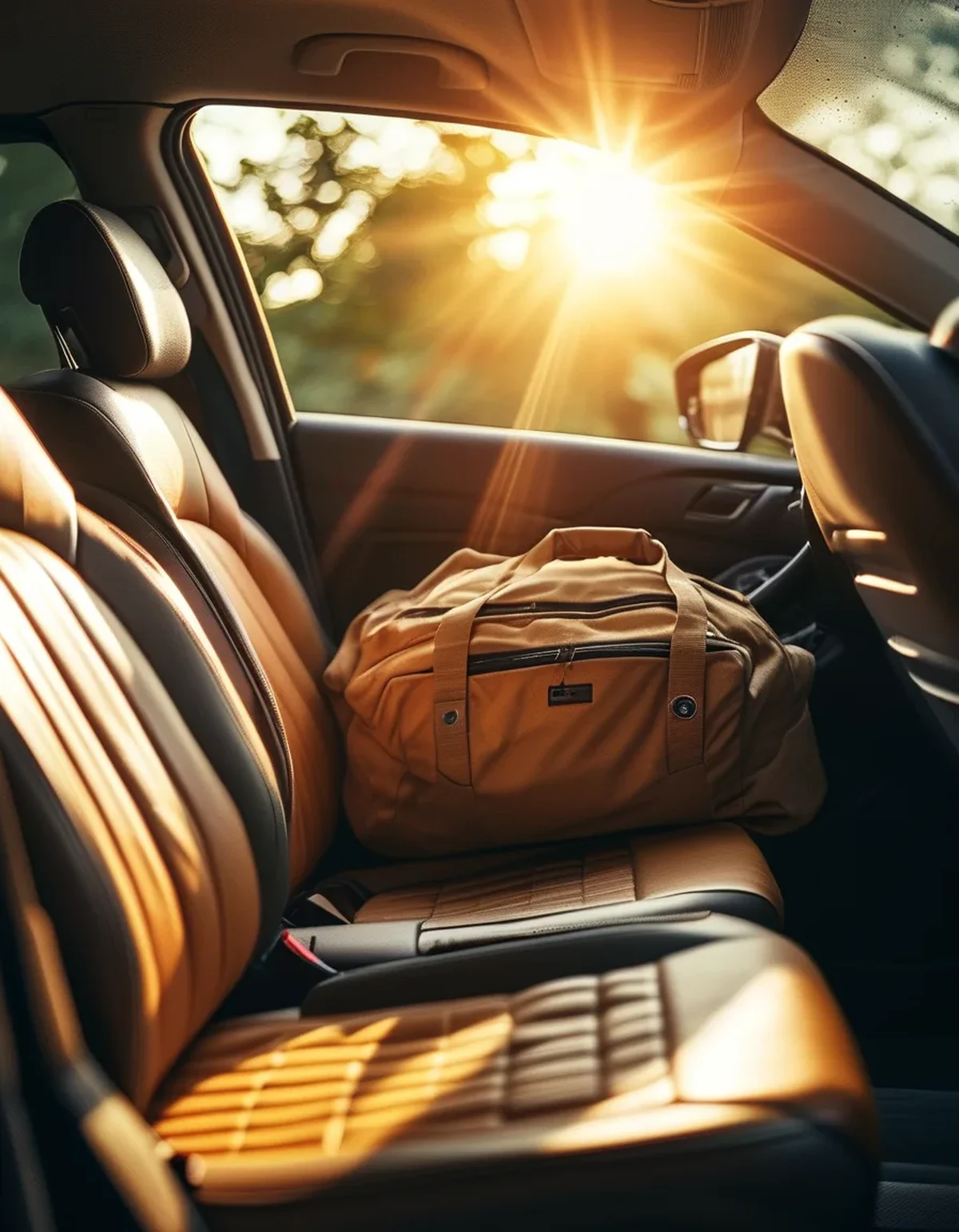
The fix is trivially simple and almost nobody does it: put the bag in the footwell or the boot rather than on the seat. That single change removes most of the direct-light exposure at no cost.
4. Printed logos and heat transfers start to lift
This is the fastest-appearing damage on the list, and often the first sign anything is wrong.
Most logos, reflective details, and graphics on activewear are applied as heat transfers - a film bonded to the fabric with heat and pressure, typically applied somewhere in the 300 degree range for a few seconds.
The adhesive used softens well below its application temperature. Sustained exposure at 150 to 170 degrees is enough to soften it, and if the garment is folded or compressed in a bag while that adhesive is soft, the transfer can bond to whatever it is pressed against - itself, another garment, the bag lining.
What you see afterward is cracking at the edges, a slight lift at one corner, or in the worst case a section of the logo transferred onto the fabric behind it. Once the edge lifts, ordinary washing accelerates it quickly.
Same mechanism applies to:
- Reflective strips, which are a bonded film and are among the most vulnerable elements on any garment.
- Silicone grippers on shorts and waistbands, which can go tacky and pick up lint permanently.
- Taped or bonded seams on shells and jackets, which is a more expensive version of the same problem.
If you must leave kit in a car, leaving it unfolded and uncompressed meaningfully reduces this specific risk, because the transfer needs contact pressure to migrate.
5. Moisture-wicking finishes degrade
Some of the performance you paid for is a surface treatment, and surface treatments are the least durable part of any garment.
Many activewear fabrics get their moisture management from the fiber structure itself, which is durable. But a significant number rely partly on an applied hydrophilic finish to help sweat spread and evaporate, and most anti-odor performance comes from an applied treatment - silver-based, zinc-based, or similar.
These finishes are degraded by heat, by UV, and by repeated washing. A hot car delivers the first two at once.
The symptom is a garment that used to feel dry during a workout and now feels like it is holding sweat, with no visible change. People generally interpret this as the fabric wearing out, and in a sense it has - the finish has, even though the fabric underneath is intact.
The anti-odor version is more noticeable because it compounds with point 2. A treated garment that has lost its treatment and has also been repeatedly stored damp and warm will develop the set-in smell dramatically faster than one that has been cared for.
There is a partial remedy worth knowing: a wash with a dedicated sports detergent or an occasional soak in a solution of white vinegar and cold water strips accumulated body oils and residue and restores a surprising amount of wicking performance. It does not restore a degraded finish, but a lot of what feels like lost wicking is actually oil buildup blocking the fabric, and that part is fixable.
6. The fabric picks up a permanent set
Synthetic fibers are thermoplastic, and that is both how they are made and how they are ruined.
Polyester and nylon are heat-set during manufacture - the fabric is heated to lock in its structure, which is exactly how pleats are made permanent and how embossed textures are created. The fiber remembers whatever shape it was in when it cooled.
Which means a garment crumpled tightly in a bag at 160 degrees for six hours is, in a minor way, being heat-set into that crumple. It is not enough heat to create sharp permanent creases in most cases, but it is enough to produce:
- Soft creases that do not hang out, particularly at fold lines across a waistband or down a leg.
- A flattened texture on embossed or ribbed fabric where it was pressed hard against something.
- Distorted seams where a garment was folded across one at pressure.
The effect compounds with the elastane degradation. A fabric that has lost some recovery and has also been set into a crumpled shape has essentially no mechanism left for returning to flat.
The avoidance is the same as for point 4 - do not store it compressed while hot. If it has already happened, a cool wash and a flat dry recovers some of it, though not all.
7. Everything above happens faster than the clock suggests
The temperature curve inside a parked car is front-loaded in a way most people badly underestimate.
A car in direct sun gains the majority of its total temperature rise in the first 30 minutes. By one hour it is close to its maximum. The intuition that a quick stop is harmless is roughly the opposite of true - the quick stop is where most of the heating happens, and further hours mainly extend the exposure rather than increase the peak.
A few numbers worth carrying around, for an 85 degree Fahrenheit ambient day in direct sun:
- 10 minutes: interior around 100 degrees.
- 30 minutes: around 120 degrees.
- 60 minutes: around 130 to 140 degrees.
- Dashboard and any surface in direct sun: substantially higher again, often 160 to 180.
Cracking a window helps far less than people expect - typically only a few degrees.
So the practical rules that follow from all seven points are short:
- Take the bag inside. Ninety percent of the problem, solved by one habit.
- If it must stay, put it in the boot or footwell, out of direct light and in the coolest part of the car.
- Never leave it damp. A damp garment in a hot car is the worst case on this entire list; if you cannot wash it, at least hang it loose to dry.
- Do not fold or compress warm kit - leave it loose.
- Wash sooner rather than later, in cold water with a sports detergent.
The two-minute version: bring the bag in, hang the damp things over something, wash them tomorrow. That is the entire protective protocol.
TL;DR:
- A parked car reaches 130 to 170 degrees Fahrenheit, above the roughly 140 degree point where elastane begins permanent degradation.
- Damp kit in heat is the worst case: bacteria can double every 20 to 30 minutes and produce the set-in smell that survives washing.
- Side and rear windows pass far more UVA than the windscreen, producing directional, irreversible fading on one panel.
- Heat transfers, reflective strips, and silicone grippers soften and lift; storing kit compressed while hot makes it much worse.
- Most of the temperature rise happens in the first 30 minutes, so a short stop is not the safe case people assume.
Bring the bag inside and hang the damp things. That one habit prevents six of the seven problems on this list.
See It in Motion
Seen here: Super High Waist Embossed Yoga Leggings with Inner Pocket — shop it on bubblelime.com
Keep Reading
This article is for general informational and styling purposes only. Fit, sizing, and product availability may vary.