What Sunscreen Actually Does to Your Activewear (and How to Undo It)
Quick Answer: Most mystery stains on summer activewear come from avobenzone, the most common chemical UV filter, which reacts with iron in water to form rust-colored marks that regular detergent cannot touch - and bleach makes dramatically worse. Mineral sunscreens cause a different problem: zinc oxide builds up as a stiff, water-repelling film that kills wicking. The fixes differ - rust remover for avobenzone marks, degreasing dish soap for mineral buildup - and the prevention is the same for both: apply sunscreen, wait ten minutes, then dress.
The leggings are fine everywhere except a faint orange line at the waistband. The sports bra has gone slightly stiff at the shoulders. The white tank from July looks tea-stained at the neckline. Three different symptoms, one August-long cause, and none of it is your washing machine’s fault.

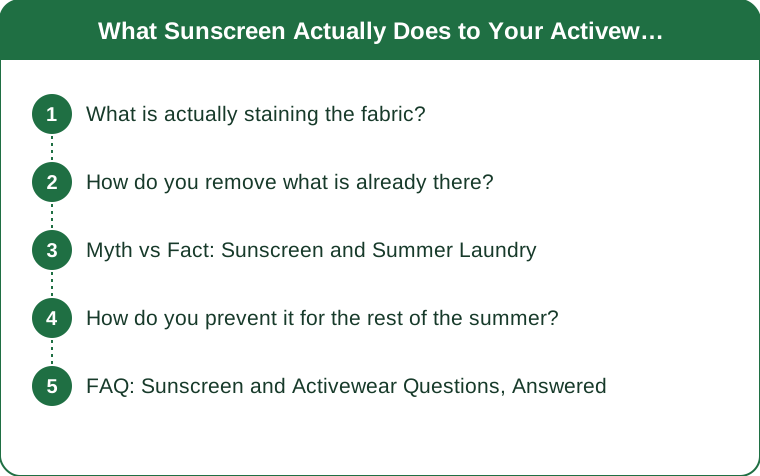
What is actually staining the fabric?
Two different chemistries, which is why one cleaning method never fixes everything.
Chemical sunscreens: the avobenzone-iron reaction. Avobenzone appears in a large share of chemical sunscreens because it is one of the few filters covering the full UVA range. It has one awkward habit: it binds with iron to form colored complexes - effectively a rust stain manufactured in place. The iron comes from your water supply, especially well water and older pipes, and trace iron exists almost everywhere. The sequence: sunscreen transfers to fabric during wear, the wash provides iron and agitation, and the garment emerges with orange-brown marks that were invisible going in. This delayed appearance is why the stain seems to come from nowhere.
Mineral sunscreens: the zinc and titanium film. Zinc oxide and titanium dioxide do not react with anything - that inertness is their skincare selling point - but they are solid particles carried in water-resistant binders designed to stay put through sweat and swimming. That same staying power means they laminate onto fabric fibers, wash cycle after wash cycle, building a pale, faintly greasy film. On technical knits the film does real damage to function: it clogs the spaces between fibers that make wicking work, so the buttery-soft leggings that used to move sweat now hold it, and the fabric hand goes stiff and slightly chalky.
Plus the supporting cast: the oils, silicones, and emollients in any sunscreen behave like body oils - they accumulate, grab dirt, and contribute to that never-quite-clean feeling summer activewear develops.
Where it concentrates tells you it is sunscreen: waistband edges, sports bra bands and straps, shoulder seams, the neckline, and the outer thighs of yoga pants where freshly-creamed hands rest. Sunscreen stains map to skin-contact pressure points; food and sweat stains do not.
How do you remove what is already there?
Match the fix to the chemistry - the treatments are not interchangeable.
For orange or rust-colored marks (avobenzone): you are treating a rust-family stain, so use a rust remover - products based on oxalic acid or hydroxyacetic acid, sold for rust stains on fabric. Apply to the dry garment per the label, let it work, rinse thoroughly, then wash cold. Old, heat-set marks may need a second round. Check the care label and test somewhere hidden first on anything vivid, since rust removers can shift some dyes.
The one absolute rule: no chlorine bleach. Bleach plus iron compounds deepens and sets rust stains - it is the classic way a faint orange smudge becomes a permanent one. Oxygen bleach is gentler but still not the right tool for the iron reaction; the rust-specific products are.
For stiff, pale, water-repelling buildup (mineral): you are removing a greasy mineral film, which is a degreasing job. Work a drop of plain dish soap into the affected area with a soft brush and warm water, let it sit fifteen minutes, then machine wash cold with technical-fabric detergent. For a whole garment gone stiff, a soak in warm water with a scoop of oxygen-based laundry booster before washing helps lift the accumulated layers.
For general summer grime (the oils): wash sooner. Sunscreen oils set the same way body oils do - the load that sits damp in a hamper for three days bonds its oils into the fibers. Same-day or next-day washing in summer prevents most of the residue problem before it needs solving.
And skip fabric softener entirely, which on technical knits adds one more coating on top of the coatings you are trying to remove. If wicking has died, softener plus sunscreen is usually the combined cause of death.

Myth vs Fact: Sunscreen and Summer Laundry
Myth: Bleach is the strongest option for sunscreen stains. Fact: It is the one thing guaranteed to make avobenzone marks worse - chlorine bleach reacts with the iron complex and locks the stain in permanently. Rust remover, the least intuitive product in the aisle, is the correct strong option.
Myth: The stains mean the sunscreen was cheap. Fact: Avobenzone sits in products at every price, including premium ones, and formulation price has no relationship to staining. The variables that matter are which filters are in the bottle and how much iron is in your water.
Myth: Sunscreen washes out eventually on its own. Fact: The opposite direction is more accurate. Unremoved residue accumulates, and every hot wash or dryer cycle sets it deeper - heat is the setting agent. What comes out eventually is the fabric’s wicking, not the sunscreen.
Myth: Only white and pale fabrics are affected. Fact: Dark colors hide the discoloration but collect the same film. Black leggings with dead wicking and a stiff waistband have the identical problem minus the visual warning. Function damage is colorblind.
Myth: UPF clothing means this whole problem is solved. Fact: Partly true and worth doing - a UPF top means sunscreen only goes on exposed skin, which shrinks the transfer zone dramatically. But the neckline, waistband, and strap edges still touch creamed skin, so the pressure-point stains continue on a smaller scale.
How do you prevent it for the rest of the summer?
Five habits, in order of payoff.
1. Apply, then wait, then dress. The single biggest lever. Sunscreen needs about ten to fifteen minutes to absorb and set on skin - that is also exactly the window in which it transfers most heavily to fabric. Sunscreen first, coffee or packing next, clothes last. This one sequencing change prevents the majority of transfer at zero cost.
2. Mind the re-application moment. Midday reapplication usually happens while dressed, straight onto the shoulder straps and waistband edges. Blot the skin near fabric edges with a tissue after reapplying, or use a stick format near clothing lines - sticks transfer far less than lotions.
3. Consider the filter list for high-transfer days. For a long outdoor workout in your favorite yoga pants, a zinc-based mineral sunscreen trades the permanent orange stain risk for removable film buildup - a better failure mode for fabric you care about. Some newer chemical formulas skip avobenzone entirely; the ingredient list tells you in five seconds.
4. Designate sun-duty pieces. The two or three pieces that do beach days, long runs, and yard work take the sunscreen hit all season; the newest and best pieces stay out of the splash zone. Rotating sacrifice is how the whole wardrobe survives the summer.
5. Wash summer loads fast, cold, and dryer-free. Cold water keeps residues loose rather than heat-setting them, technical-fabric detergent actually targets oils, and line drying in August air is fast and free. The dryer is the great stain-setter and elastane-killer, and skipping it is the cheapest fabric-life extension available.
The seasonal payoff for starting now: everything you prevent in the remaining hot weeks is one less set-in stain discovered in October when the summer gear gets folded away - the point at which every remaining mark has been heat-set past rescue.
FAQ: Sunscreen and Activewear Questions, Answered
Why do my leggings have orange stains at the waistband?
Almost certainly avobenzone, the most common chemical UV filter, reacting with trace iron in your wash water to form rust-colored complexes. The waistband concentrates transfer because it presses against freshly creamed skin. Treat it like a rust stain - with a fabric rust remover, never chlorine bleach, which sets it permanently.
How do you get sunscreen stains out of workout clothes?
Match the treatment to the type: rust remover for orange avobenzone marks, and a dish-soap degrease plus cold technical-detergent wash for the stiff pale film mineral sunscreens leave. Wash summer activewear promptly and skip the dryer, since heat sets both kinds of residue.
Does sunscreen ruin moisture-wicking fabric?
Accumulated residue genuinely impairs it - mineral particles and emollient oils clog the fiber spacing that wicking depends on, leaving fabric that holds sweat and feels stiff. It is usually reversible early with degreasing and residue-stripping washes, and preventable by letting sunscreen absorb before dressing.
Which sunscreen is best if I care about my clothes?
Avobenzone-free formulas remove the permanent-stain risk, so check the active ingredients. Mineral zinc formulas still build removable film, and sticks transfer less than lotions near clothing edges. Whatever the filter, the ten-minute wait between applying and dressing protects fabric more than any product choice.
TL;DR:
- Orange marks are avobenzone plus iron in wash water - a manufactured rust stain. Rust remover fixes it; bleach makes it permanent.
- Mineral sunscreens build a stiff film that kills wicking - degrease with dish soap and cold washes.
- Stains cluster at waistbands, straps, and necklines because transfer follows skin-contact pressure.
- The one prevention habit that matters most: sunscreen first, wait ten minutes, dress last.
- Cold washes, fast turnaround, no dryer - heat is what sets summer residue forever.
The sunscreen is doing exactly what the label promised - staying on through sweat and water. It just never promised to stay only on you.
See It in Motion
Seen here: Racerback Tank Top - White — shop similar styles on bubblelime.com
Keep Reading
This article is for general informational and styling purposes only. Fit, sizing, and product availability may vary.